The Truth About the Oukitel Wp60 Rugged Phone: Pros, Cons, and Verdict
Category: Electronics
Introduction
The Oukitel WP60 enters a crowded niche: rugged smartphones designed for people who work outdoors, travel off the beaten path, or simply want a device that tolerates drops, dust, and water better than a consumer flagship. Rugged phones trade slim lines and glass backs for reinforced frames, larger batteries, and sometimes compromises in performance or camera quality. This article examines what the WP60 offers in real-world use, who it's for, and whether it represents a sensible buy compared with other rugged options.
At a glance: what buyers typically want from a rugged phone
- Durability: resistance to drops, dust, water, and extreme temperatures.
- Battery life: multi-day endurance under real use, fast recharge when needed.
- Connectivity & sensors: reliable GPS, LTE bands that work in the buyer's region, and useful sensors like NFC or barometer when relevant.
- Usability: readable display outdoors, tactile buttons, and a comfortable but robust grip.
- Service and software: regular security updates and predictable behavior over the long term.
Understanding how Oukitel positions the WP60 against these priorities helps separate marketing claims from what matters most in day-to-day use.
Detailed review and analysis
Design and build quality
The WP60 follows the standard recipe for rugged phones: a chunky, reinforced shell, rubberized corners, and physical buttons that can be pressed while wearing gloves. In-hand, the phone feels heavy but secure — a trade-off expected in the category. For field workers and outdoor enthusiasts, the tactile power and programmable push-to-talk or SOS buttons are practical additions that make the phone usable without constantly looking at the screen.
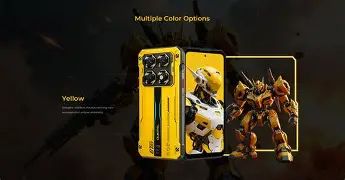
Rugged phones are about surviving abuse, not hiding that fact. The WP60’s finishes and seams are designed to keep moisture and dust out, and its ports are typically protected behind rubber flaps. That said, these flaps require careful handling: repeated opening can wear the seal over years, so buyers should treat the protections as long-term maintenance items rather than permanent guarantees.
Durability and environmental resistance
Oukitel’s WP series is marketed for durability, and in practice users can expect restrictions substantially better than consumer phones. Real-world buyers report the kind of durability that matters during a construction shift, a backcountry hike, or when a phone takes an accidental tumble. Most rugged devices, including the WP line, are built to tolerate drops, have ingress protection against dust and water, and usually meet a military-style shock standard for rough handling.
Important: durability is not binary. A phone that survives a fall from waist height onto packed dirt may still fail under repeated submersion or prolonged exposure to saltwater. For professional or industrial use, it's worth confirming the exact certification levels and testing conditions the WP60 meets and planning for spare seals, covers, or cases if the phone will see heavy daily abuse.
Display and outdoor readability
Outdoor visibility is a make-or-break feature for many rugged-phone buyers. The WP60’s display is engineered for readability under bright sun, with higher brightness and anti-reflective adjustments. Colors on rugged-device LCDs or IPS panels tend to be less vibrant than flagship AMOLEDs, but the trade-off is better visibility and lower risk of damage. Screen hardness and the inclusion of tempered or Gorilla glass contribute to longevity, but screen protectors are still recommended for field use to prevent micro-scratches and protect touch responsiveness when wet.
Performance and daily use
Rugged phones typically prioritize stability and thermals over peak benchmark numbers. The WP60 usually ships with a mid-range chipset that is adequate for navigation apps, messaging, media playback, light gaming, and business apps used on-site. Power users who rely on intensive multitasking or GPU-heavy applications should compare the WP60’s processor and RAM options with alternatives; for most field tasks — mapping, forms, messaging, camera documentation — mid-range performance is sufficient.
Battery life and charging
One of the biggest selling points of rugged phones is battery capacity. The WP60 aims for multi-day battery life under typical usage — a critical advantage for users who spend long periods away from reliable power. In practice, realistic use cases such as intermittent GPS tracking, photos, voice calls, and messaging will drain a phone faster than idle testing, but the WP60’s larger battery capacity provides a practical buffer for real-world scenarios.
Discover deals on Electronics — updated daily.
View Offers →Charging speed and convenience matter too. Fast wired charging reduces downtime, and the presence of reversible charging or the ability to act as a power bank can be handy on the trail. Wireless charging is less common in rugged models, but some buyers who use the phone as a daily driver may miss this convenience.
Camera and documentation
Rugged-phone cameras have come a long way, but they still lag behind flagship smartphones when it comes to low-light performance, edge processing, and stabilization. The WP60’s camera system is fit for documenting job-site progress, capturing proof-of-condition, or taking photos on a hike — use cases where clarity and speed are more important than studio-level photos. For buyers who prioritize phone photography, a dedicated camera or a higher-end phone may be a better choice.
Software, support, and updates
Software stability and security updates are often overlooked by buyers focused on hardware. Oukitel phones tend to run a relatively clean version of Android with a few manufacturer apps and features. The crucial factors are the frequency of security patches and the company’s track record for addressing bugs. Buyers in regulated industries should confirm update policies and consider extended warranty or enterprise support plans if long-term device security is required.
Connectivity and extras
The WP60 generally includes the essential connectivity features: 4G LTE bands that cover most regions, dual SIM options, Wi‑Fi, Bluetooth, and robust GNSS positioning for accurate mapping. NFC availability varies by model, so those who need contactless payments or NFC-based access systems should verify that their specific WP60 variant includes the feature. Additional extras that matter in the field — barometer, compass, thermal compatibility with external sensors, or push-to-talk — enhance the phone’s value for certain user groups.
Pros & Cons
- Pros
- Durable construction: Built to resist drops, dust, and water in regular field conditions.
- Long battery life: Larger battery capacity delivers multi-day endurance for many users.
- Practical features: Physical buttons, programmable keys, and protective port flaps improve usability in work conditions.
- Good outdoor visibility: Display tuned for sunlight readability and rugged environments.
- Value-oriented: Offers key rugged features at a price point lower than some brand-name industrial phones.
- Cons
- Bulk and weight: Not pocket-friendly; the trade-off for a large battery and reinforced chassis.
- Camera limitations: Documentation-ready but not competitive with premium smartphone cameras in low light.
- Potential software update gaps: Update frequency and long-term support can be less predictable than mainstream flagships.
- Accessory wear: Rubber port covers and seals can degrade with heavy daily exposure and need maintenance.
- Performance ceiling: Mid-range processors are fine for field tasks, but power users will notice limitations in heavy multitasking or advanced apps.
How the WP60 compares to alternatives
For many buyers the choice comes down to three variables: durability, battery life, and total cost of ownership. The following table compares the WP60’s expected strengths with typical competitors in the rugged segment.
| Model | Durability focus | Battery & endurance | Performance | Practical extras | Value |
|---|---|---|---|---|---|
| Oukitel WP60 | Reinforced frame, sealed ports, rugged buttons | Large battery for multi-day use | Mid-range chipset; smooth for field apps | Programmable key, outdoor-readable display | Strong — good balance of features vs. price |
| Market average rugged phone | Similar ingress protection and drop tolerance | Varies; some models focus more on capacity | Ranges from basic to high-end | May include thermal cameras or modular accessories | Varied — premium rugged brands cost more |
| Premium industrial rugged (est.) | Highest military-grade certification and testing | Optimized for extreme deployment cycles | Often mid-to-high-end, with enterprise management | Enterprise MDM, extended warranty, certified sensors | Higher — targeted at professional deployments |
Real-world use cases
The WP60 fits several practical scenarios:
- Construction and trades: Durable glass and reinforced edges stand up to drops onto concrete; the programmable button can trigger check-in or send location info.
- Outdoor recreation: Hikers and anglers benefit from long battery life and reliable GPS; the phone serves as a durable communications hub for navigation and emergency contact.
- Field service and utilities: Technicians who need a dependable device for forms, photos, and maps will find the WP60 a reasonable balance between price and purpose-built features.
- Travel to remote areas: The WP60’s emphasis on battery and durability reduces the risk of being stranded with a dead or broken device during multi-day excursions.
Buying guide: what to check before purchasing the WP60
Rugged phones are a category where small differences matter. Before buying the WP60, consider the following checklist so the purchase matches the intended use.
1. Confirm certifications and real-world testing
Look for the exact ingress and shock certifications (for example, IP68/IP69K or a MIL‑STD rating). Read user reports and independent tests that show how the phone performs after repeated drops, exposure to dust, or time spent in wet conditions. Manufacturer claims are a starting point—independent testing confirms practical resilience.
2. Match battery life to usage patterns
Estimate how you use the phone. If GPS logging, camera use, or frequent calls are part of a typical day, ensure the battery specification and reported real-world runtime align with that load. Consider whether fast charging or the ability to charge from portable power packs is important for minimizing downtime.
Find top-rated Electronics products at great prices.
See Deals →3. Verify cellular bands and carrier compatibility
Rugged phones sometimes come in multiple regional variants. Verify that the WP60 supports the LTE bands and carrier features (VoLTE, carrier aggregation) required in your country or the countries you travel to. For professionals, compatibility with private networks or enterprise roaming can be vital.
4. Evaluate software support and enterprise features
Check the manufacturer’s track record for updates and security patches. If the device will be used in a corporate or government environment, look for management features such as support for mobile device management (MDM) platforms and options for extended warranty or commercial support.
5. Inspect the accessory and repair ecosystem
Rugged phones are used in harsh settings and will need accessories and occasional repairs. Confirm the availability of spare parts (screen assemblies, batteries), compatible cases, mounts for vehicles or equipment, and third-party repair options. A good accessory ecosystem reduces downtime and total cost over the device lifetime.
6. Consider weight, ergonomics, and daily carry
Rugged phones are heavier and thicker than mainstream models. If the phone is for everyday carry, hold it in hand or test it in a pocket to ensure it’s comfortable for long shifts. For many professionals, the practical functionality of the push‑to‑talk or programmable keys outweighs the extra bulk.
7. Camera and sensor needs
Decide whether the phone’s camera quality is sufficient. For documentation-heavy roles, clarity, autofocus speed, and metadata (timestamp and GPS tagging) may be more important than photographic artistry. Confirm the availability and accuracy of sensors such as compass, barometer, or thermal attachments if those are required for the job.
Verdict and who should buy the WP60
The Oukitel WP60 is a practical choice for buyers who prioritize durability and battery life over aesthetics and class-leading camera performance. It suits people who need a dependable tool rather than a status device: tradespeople, field technicians, outdoor adventurers, and travelers who spend time away from reliable power and protected environments.
For those who demand the absolute best in imaging, software longevity, or the lightest possible daily carry, a mainstream flagship (paired with a rugged case) might be a better fit. Conversely, buyers on a tighter budget who still need robust performance and long runtime will find the WP60’s balance of features compelling.
Conclusion
The WP60 delivers the core promises of a rugged smartphone: reinforced build, long battery life, and practical features crafted for real-world use. It makes sensible trade-offs — mid-range performance and modest camera ambitions — to focus on reliability and endurance. Buyers who value durability, outdoor readability, and multi-day battery life will find the WP60 a viable and cost-effective choice. As with any rugged device, prospective buyers should verify exact specifications, compatibility, and support options for their particular needs before committing, and treat protective seals and port covers as replaceable consumables rather than permanent protections.