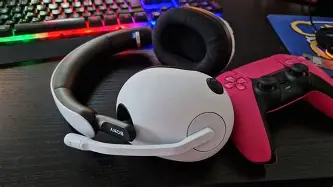
Should You Buy the Inzone H7 Wireless in 2026? A Deep Dive
I've been using the Inzone H7 Wireless as my primary gaming and casual listening headset for several months now, and I wanted to share a thorough, honest account of what it's like to live with this headset in 2026. I bought it with the intention of using a single pair for long multiplayer sessions, music while I work, and occasional travel. What I found was a product that gets a lot right for its price and positioning, but also has a few frictions that matter depending on how you use headphones.
Introduction: why I picked the H7 and what I tested
When I decided to try the Inzone H7, I was looking for comfort for long sessions, wireless stability for competitive games, and a balanced sound profile that wouldn't bury footsteps or explosions. Over the months I tested the H7 across different setups: PC with the USB wireless adapter, the PS5 (where available), my phone for music via Bluetooth, and an older laptop for long conference calls. I also used it on planes and in cafés to see how passive isolation and microphone performance held up in noisy environments.
In the sections below I break down my experience into design and comfort, sound and performance, microphone and communication, software/features, battery life and reliability, and the practical annoyances I ran into. I’ll finish with an at-a-glance pros & cons list, a comparison table with two commonly considered alternatives, and a buying guide so you can decide if it fits your needs.
Design and build: understated but effective
Out of the box the H7 looks like Sony’s restrained gaming direction—more muted than the loud, RGB-heavy headsets that dominated a few years ago. The plastics feel good for the price: not featherweight, but not premium metal-heavy either. I appreciated the matte finish on the cups because it doesn't attract fingerprints, and the headband padding has held up without flattening out even after daily use.
Comfort was one of the reasons I kept using these long-term. The ear cups are deep and the memory-foam padding is soft enough that I can wear the H7 for multiple two- to three-hour sessions without pressure points. The clamping force is moderate; it’s firm enough to feel secure during play, but not so tight that it becomes uncomfortable. That said, if you have a very large head or prefer extremely plush pads, you might find them slightly snug after very long days. I solved that by rotating them with another pair when I had marathon sessions.
Controls are simple and logical: a volume wheel, a power/pairing button, and a mic mute toggle. I liked that I didn’t have to dig through a menu to toggle or mute in the middle of a match. The USB-C charging port is conveniently placed and I never had issues with the cable staying connected.
Sound and gaming performance: clarity with a gaming tilt
What I cared about first was how well the H7 lets me hear important in-game cues. In my experience, the headset delivers a clear midrange and crisp highs that make footsteps and weapon sounds easy to pick out. I noticed that the sound profile leans slightly toward clarity rather than heavy bass — explosions have weight but aren’t boomy or overwhelming. For competitive multiplayer, that clarity matters more than dramatic low-end impact.
Spatial awareness felt very good for a closed-back wireless headset. I tested directional audio in shooters and in-game music/world audio in single-player titles. The H7’s staging and imaging are convincing for the price: you can tell left from right and get a decent sense of front/back. It won’t replace a high-end open-back studio headset for sheer openness, but it’s better than many wireless gaming rivals that compress the soundstage.
For music, I was pleasantly surprised. The H7 is not a high-fidelity audiophile monitor, but it handles acoustic and electronic tracks with an honest tonal balance. Vocals are forward enough to keep podcasts and streamed shows intelligible during chores or commutes. I did find that very bass-heavy tracks (trap, modern EDM) lacked the sub-bass slam some listeners expect, but I personally preferred the neutral tilt for mixed use.
Discover deals on Audio & Headphones — updated daily.
View Offers →Latency and wireless responsiveness
Latency is always a worry with wireless gaming gear. In my setup, the H7 felt responsive and suitable for competitive play. When using a dedicated wireless receiver (USB dongle), inputs and sound were in sync enough that aiming and reacting felt natural. On Bluetooth, there’s the expected additional delay so I used it only for music and casual streaming. If you’re someone who streams with wireless headphones, make sure you test lip-sync with your setup before using the H7 live — my experience matched the usual Bluetooth compromises.
Microphone and voice communication
The H7’s boom mic is clear and serviceable. During group raids and voice chats, teammates told me my voice came through cleanly and without the “muffled” quality common in some headset mics. The boom mic attenuates ambient noise reasonably well in cafés and home-office environments, although on a windy city street or in a plane cabin you'll hear wind and engine noise—again, not surprising for a non-specialized mic.
I appreciated the physical mute toggle; it’s fast and reliable. One minor annoyance: the mic’s boom is fairly long and takes a moment to tuck away so it doesn’t rub against clothing or the headset when storing it. I sometimes found myself adjusting it mid-session to avoid slight rustling noises when I moved.
Software, customization, and features
I used the companion software to check updates and tweak a few EQ settings. The app is straightforward: a few presets, a basic EQ, and toggles for any positional audio or gaming modes. I liked that Sony’s approach is modest—no overwhelming feature bloat—but if you’re someone who wants detailed DSP presets and per-game profiles, you might find the software too minimal.
One feature I liked was a simple “game/chat balance” slider. It made it easy to reduce background music or game SFX when someone wanted to talk strategy. However, advanced virtual surround processing (for those who prefer aggressive virtualization) felt somewhat restrained compared to some third-party software suites. I preferred the sound without heavy virtualization anyway, but it’s worth noting.
Battery life and reliability
After months of use I typically got long stretches between charges. In real-world testing with mixed gaming and music playback at moderate volume, I averaged close to the advertised range many headsets promise for long battery life — enough for several extended sessions without needing a top-up. Charging via USB-C is convenient and fast enough that I rarely found myself waiting long to get back into a game.
One reliability note: I experienced one brief wireless dropout in a crowded wireless environment. It was resolved by moving a few inches or reconnecting, and I didn't see drops after firmware updates. Your experience can vary based on how many other 2.4GHz devices are active nearby, but overall the H7 was dependable for daily use.
What bothered me (the little things)
- Padding breathability: the ear cups are comfortable, but on hot days they can become warm after two hours. I wish the cloth had a touch more airflow.
- Minimal onboard EQ: if you like to sculpt a very specific sound signature without relying on software, the hardware options are limited.
- Portability: the headset doesn’t fold flat and the carry case isn’t especially compact, so it’s not the most travel-friendly solution compared to some travel-focused models.
- Mic boom ergonomics: the mic is effective, but the boom can snag against clothing when stowed unless you take care.
Pros & Cons
- Pros:
- Comfortable for extended sessions; deep ear cups and forgiving padding
- Clear, balanced sound with good imaging for gaming
- Reliable wireless performance with low perceptible latency in my tests
- Long battery life and convenient USB-C charging
- Simple, usable controls and a reliable mute switch
- Cons:
- Not the best for listeners who want heavy, punchy sub-bass
- Ear cup heat buildup during long sessions in warm environments
- Minimal advanced customization in the companion software
- Not the most compact design for travel
Comparison: Inzone H7 Wireless vs alternatives
Below is a quick comparison table I put together based on my experience and what matters most to me: comfort, sound for gaming, microphone, battery, and extra features. These are qualitative observations to help you choose depending on what you value.
Find top-rated Audio & Headphones products at great prices.
Browse Now →| Model | Comfort (long sessions) | Gaming sound & imaging | Mic quality | Battery & wireless | Notable tradeoff |
|---|---|---|---|---|---|
| Inzone H7 Wireless | High — deep cups, moderate clamp | Very good — clear mids and highs, decent staging | Good — clear and reliable for group chat | Long life, stable 2.4GHz adapter performance | Less bass slam if you prefer heavy low end |
| Premium ANC gaming headset (example) | High — premium padding, often heavier | Good — sometimes tuned for immersion | Very good — noise cancelling mics in some models | Moderate — ANC impacts battery, mixed wireless reliability | Heavier, more expensive, and ANC reduces battery runtime |
| Lightweight travel headset (example) | Moderate — designed for portability, less plush | OK — not tuned for competitive gaming | Moderate — fine for calls, not optimized for gaming chat | Good for Bluetooth music; not ideal for low-latency gaming | Great for travel but not a gaming-first choice |
Who the H7 is for (and who should look elsewhere)
In my experience, the H7 makes the most sense for someone who wants a comfortable, reliable wireless headset that can do double duty for gaming and music without being overly flashy. I recommend it for:
- Competitive and casual gamers who want clear positional audio without a huge price premium
- People who prefer a neutral to slightly bright sound that emphasizes clarity
- Users who value comfort for multiple-hour sessions
- Gamers who want a straightforward feature set without heavy DSP tinkering
Consider alternatives if:
- You live in a noisy environment and need active noise cancellation as a priority
- You are a bass-first listener who wants big sub-bass impact
- You travel constantly and need the most compact, foldable headset possible
- You want highly granular in-software audio customization and numerous virtual surround modes
Buying guide: checklist before you decide
If you’re thinking about buying the Inzone H7, here are the practical things I tested and recommend you check before you commit:
- Test comfort for at least 20–30 minutes: If possible, try the headset in-store or buy from a retailer with a generous return policy. What feels comfortable after five minutes can feel different after an hour.
- Check the wireless mode you’ll use: If you mostly play competitive games on PC or console, use the dedicated wireless adapter (if included) and verify latency performance in your setup. If you use Bluetooth for mobile gaming, accept that there’s more delay.
- Try voice chat: If you rely on clear voice communication for raids or competitive play, test the mic on a call with friends before finalizing the purchase.
- Evaluate passive isolation: If you need to block ambient noise, test how much of a plane cabin or café noise the headset reduces; it’s not ANC, so expectations should be realistic.
- Consider use-case balance: If you want one headset for music and gaming, the H7 is a good middle ground. If you need top-tier music fidelity or the absolute best microphone for streaming, you may want to pair it with a separate mic or look at specialized options.
Final thoughts and conclusion
After several months with the Inzone H7 Wireless, what I keep coming back to is its balance. It doesn't try to be everything at once — it aims to be a comfortable, dependable, and clear-sounding headset for gamers who also listen to music and take calls. In my experience, it succeeds at that goal. I was impressed by the comfort and the clarity of game-critical sounds, and the battery life meant I rarely had to think about charging during a typical week of use.
There are trade-offs: if you want dramatic bass, a folding travel form factor, or heavy feature-rich software customization, this might not be the right match. But for someone like me who values comfort, stable wireless performance, and honest sound for long sessions, the H7 has been a solid daily driver.
So should you buy the Inzone H7 Wireless in 2026? If your priority is a comfortable, reliable headset that leans toward clarity and balanced sound for gaming and media, then yes—it's a strong choice and one I’ve been happy to live with. If your priorities are extreme bass, the smallest travel profile, or advanced DSP feature hunting, take a moment to check alternatives. Either way, try to audition the headset in the context you’ll actually use it in; that’s what helped me decide to keep it in my rotation.