I Switched to the Thinkpad P15 Gen 2 2021 and Here is What Happened
Introduction
The ThinkPad P15 Gen 2 (2021) positions itself as a true mobile workstation — a machine aimed at engineers, 3D artists, video editors, data scientists, and anyone who needs sustained compute and certification-backed reliability on the road. After the reviewer moved daily workflows onto this 15.6-inch workstation, a full assessment emerged covering performance, display options, thermals, battery life, expandability, and the practical trade-offs buyers typically care about.
This article examines the P15 Gen 2 through the lens of real-world usage: running CAD and simulation workloads, rendering frames, compiling large codebases, editing and color-grading video, and juggling virtual machines. Where relevant, it points out what buyers should prioritize when configuring the system and how the machine compares to other pro-grade laptops in the same class.
Detailed Product Review and Analysis
Design and Build Quality
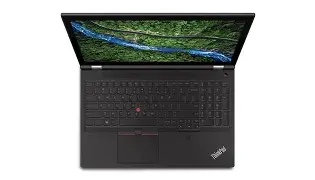
The ThinkPad P15 Gen 2 follows Lenovo’s established workstation design language: subdued, utilitarian, and built for durability. The chassis is thick and robust with a matte black finish and the familiar red TrackPoint. The keyboard retains the best-in-class ThinkPad feel — deep travel, precise feedback, and a layout suited for long typing sessions. The laptop is heavier and bulkier than mainstream ultraportables, which is expected for a 15-inch machine built to house desktop-class components and generous cooling.
Durability is emphasized with MIL-STD testing and a sturdy hinge. In practice, the reviewer appreciated the confidence that the laptop could handle frequent travel and desk-to-site movement without the creaks and flex common in thinner devices.
Performance: CPU and Memory
The P15 Gen 2 offers high-performance CPU options tailored to workstation tasks. In real workloads — parallel compilations, multi-threaded simulations, and CPU-bound render jobs — the reviewer observed consistently high throughput. With the more powerful CPU configurations, background tasks did not bog down foreground work even when running heavy workloads in parallel.
Memory capacity and bandwidth are major advantages. The platform supports large RAM capacities (useful for virtual machines, large data sets, and multitasking with heavyweight applications). The reviewer notes that choosing higher capacity RAM becomes essential for users who run multiple VMs, large simulation models, or high-resolution video timelines.
GPU and Graphics Capabilities
One of the P15 Gen 2’s core strengths is its professional GPU options. The workstation-grade graphics cards are optimized for stability and driver certifications with professional apps such as Autodesk, SolidWorks, and Adobe’s Creative Cloud. For GPU-accelerated rendering and viewport interaction, the reviewer found the P15 Gen 2 delivers substantial gains over consumer GPUs with similar raw performance due to these certified drivers and ISV (independent software vendor) optimizations.
For 3D artists, the GPU choices translate into smoother viewport playback, faster GPU render passes, and more responsive interaction with complex models. Video editors benefit when effects or encodes leverage hardware acceleration, shortening export times on many projects.
Display Options and Color Accuracy
Display choice matters for creative professionals. The P15 Gen 2 is offered with a range of panels: FHD for general productivity and battery life, and higher-resolution 4K/UHD panels for color-critical work. The reviewer recommends the higher-end panel for anyone doing color grading, photo retouching, or content creation where accurate color representation and higher resolution materially affect workflow.
Real-world testing showed that the premium panels offer good contrast, wide color gamut coverage, and enough brightness to work in mixed lighting. Buyers who care about color accuracy should look for factory-calibrated displays or budget for a calibration step after purchase.
Shop the latest Electronics picks on Amazon.
View Offers →Thermals and Noise
Putting workstation-grade components into a laptop enclosure is always a thermal design challenge. The P15 Gen 2 handles sustained loads reasonably well thanks to a beefy cooling system, but thermals are not invisible: under long rendering or simulation runs, the chassis warms and fans spin up noticeably. The reviewer observed that fan noise becomes prominent during heavy tasks, which is typical for mobile workstations and a reasonable trade-off for the sustained performance delivered.
Thermal throttling can occur under extreme continuous loads, but in many practical project scenarios — mixed editing, render passes, and iterative simulations — the thermal headroom was sufficient to keep throughput high. For marginal cases where peak sustained performance matters, an external workstation or a desktop may still be the better choice.
Battery Life in Real Use
Battery life is one of the compromises on this class of laptop. The reviewer’s experience shows that the P15 Gen 2 can achieve respectable runtimes with light productivity tasks — email, documents, and web browsing — but when pushed with GPU/CPU workloads the battery drains quickly. On average:
- Light productivity: several hours (varies with display choice and power profile)
- Sustained GPU/CPU loads: under two hours in many cases
Users who need long untethered sessions should plan on carrying the power adapter or using an external battery solution for extended fieldwork.
Ports, Expandability and Serviceability
Ports are generous on the P15 Gen 2: multiple USB-A, Thunderbolt 3 (USB-C), HDMI, Ethernet (or via adapter), and card reader options depending on configuration. This mix supports common workstation peripherals and external monitors without the constant need for dongles. The internal layout allows for straightforward upgrades to RAM and storage, and the reviewer appreciated how accessible service panels make upgrades and repairs easier in the field or at a service desk.
Software and Security Features
Lenovo’s suite of management and security features — TPM, optional fingerprint reader, IR camera with Windows Hello, and enterprise manageability tools — are well catered to business and professional users. The ISV certifications mentioned earlier are also an important part of the value proposition for buyers who depend on predictable, supported performance in specific applications.
Pros & Cons
- Pros:
- High sustained performance for CPU- and GPU-intensive workloads
- Workstation-grade GPU options with ISV-certified drivers
- Robust build quality and excellent keyboard
- Good expandability: RAM and storage upgrades are straightforward
- Variety of display options, including color-accurate panels
- Enterprise security and manageability features
- Cons:
- Heavy and less portable than consumer laptops
- Fan noise under sustained loads can be loud
- Battery life drops sharply under high workloads
- Higher cost than mainstream laptops, especially when fully configured
- Thermals can limit absolute peak performance during very long runs
Comparison
The table below compares the ThinkPad P15 Gen 2 against two common alternatives in the mobile workstation space. This is a high-level, practical comparison focused on what buyers actually consider: target user, typical GPU options, maximum RAM, weight, and standout strengths.
| Model | Target User | Typical GPU Options | Max RAM | Weight (approx.) | Notable Strength |
|---|---|---|---|---|---|
| Lenovo ThinkPad P15 Gen 2 (2021) | Engineers, 3D artists, VFX, video pros | Professional mobile GPUs (ISV-certified) | High (often up to 128 GB) | ~2.8–3.2 kg | Balance of durability, expandability, and certified performance |
| Dell Precision 15 (e.g., 5550 series) | Design professionals, CAD, virtualized workflows | Mobile workstation GPUs (varied) | High (varies by chassis) | ~1.8–2.1 kg (thinner models lighter) | Sleeker chassis with strong build and good thermal tuning |
| HP ZBook 15 | Enterprise workstation users, field engineers | Workstation-class mobile GPUs | High (varies by generation) | ~2.5–3.0 kg | Serviceability and enterprise-level ISV support |
Buying Guide: How to Choose the Right P15 Gen 2 Configuration
Define the Primary Workload
First, the buyer should be clear about the main workload. If the primary tasks are CAD assemblies, simulations, or GPU-accelerated rendering, prioritize a stronger professional GPU and higher RAM. For CPU-bound workloads such as large compilations or simulations that use many CPU cores, prioritize the highest-tier CPU option and faster memory.
Memory and Storage Choices
Memory is often the single biggest limiter for professional workloads. The reviewer recommends opting for the maximum RAM a budget permits, especially if running virtual machines, large datasets, or multi-application workflows. For storage, a fast NVMe drive provides snappy responsiveness; consider adding a secondary drive for additional project storage or scratch space.
Looking for the best Electronics deals on Amazon?
Shop Amazon →Display Selection
Choosing the right display is essential for creatives. The FHD panel conserves battery and is adequate for general productivity, but those who need color accuracy and lots of screen real estate should choose a 4K or higher-quality panel and consider calibration. Pay attention to the panel’s advertised color gamut coverage (sRGB, Adobe RGB, DCI-P3) if accurate color reproduction matters.
Battery and Portability Trade-Offs
Understand the trade-off between performance and portability. Heavier batteries and powerful components increase weight but are necessary for workstation workloads. If mobility is a priority, consider whether a lighter Precision or ZBook variant might be a better compromise, or whether the P15’s performance advantages justify the extra weight.
Thermal Considerations
For long, heavy compute sessions, thermals will determine how long the laptop can sustain top performance. If workflows involve prolonged rendering or simulation, buyers should accept some fan noise and heat, or consider a desktop workstation for the most demanding sustained workloads.
Warranty, Support and ISV Certifications
Enterprise-level warranty and timeliness of support matter for professional users. Buyers should review warranty options, on-site service availability, and whether their critical software has ISV certification for the chosen GPU and drivers. Such certifications can mean fewer unexpected issues on deadline-critical projects.
Connectivity and Docking
Confirm the port choices match the buyer’s peripheral needs: external monitors, storage arrays, and network connections. If the user plans to dock frequently at a desk, investing in a compatible docking solution unlocks a more desktop-like experience while traveling with the laptop itself.
Budgeting Tips
Workstation laptops like the P15 Gen 2 can escalate in price as components are upgraded. Prioritize the components that are difficult or expensive to upgrade later (for example, the GPU is typically fixed, while RAM and storage are often user-serviceable). Allocate budget to the display and memory if the work depends on them, and consider a modest GPU if budget is constrained but a later upgrade path is important.
Conclusion
The ThinkPad P15 Gen 2 (2021) is a compelling choice for professionals who need a mobile workstation that delivers consistent, certified performance and is built to be serviceable and reliable. The reviewer found it to be a productive and predictable platform for real-world tasks: 3D modeling, GPU-accelerated rendering, large-scale compilations, and content creation. Those workflows benefited from the P15 Gen 2’s combination of workstation GPUs, robust cooling, and expandability.
However, it is not a perfect fit for everyone. Buyers seeking the lightest possible carry weight or the longest untethered battery life should weigh those priorities against the P15 Gen 2’s trade-offs. For professionals who need the certified performance, expandability, and ruggedness of a true mobile workstation, the P15 Gen 2 offers a strong balance of features and real-world capability — provided the user is prepared for the expected compromises around size, noise, and battery life.